> ## Documentation Index
> Fetch the complete documentation index at: https://docs.postqueen.ai/llms.txt
> Use this file to discover all available pages before exploring further.
# YouTube setup
> Register the YouTube application and give PostQueen its keys
 On your own instance the Google Cloud project is yours: create the OAuth client, enable the YouTube APIs, then put the client id and secret in your environment.
Follow the instructions as available in the [Obtaining authorization credentials](https://developers.google.com/youtube/registering_an_application).
## General Setup
Make sure you are logged in to your Google account and visit the [Credentials - APIs & Services](https://console.cloud.google.com/projectselector2/apis/credentials) page. Make sure to read the terms and conditions and "Agree and Continue".
Create a new project by clicking on the "Create Project" button. Fill in the project name, and details and click "Create".
Create credentials by clicking on the "Create Credentials" button. Select the "OAuth client ID" option.
Navigate to the **OAuth consent screen** tab. If it is not already configured:
1. Select "External" user type, unless you have a Google Workspace organization
2. Fill in the required app information
3. Add yourself as a test user
4. Save and continue through the wizard
On the **Scopes** step, add the eight PostQueen asks for. The connect is refused if any one of
them is missing:
```
https://www.googleapis.com/auth/userinfo.profile
https://www.googleapis.com/auth/userinfo.email
https://www.googleapis.com/auth/youtube
https://www.googleapis.com/auth/youtube.force-ssl
https://www.googleapis.com/auth/youtube.readonly
https://www.googleapis.com/auth/youtube.upload
https://www.googleapis.com/auth/youtubepartner
https://www.googleapis.com/auth/yt-analytics.readonly
```
While the app sits in **Testing**, only accounts you added as test users can connect. For an
install you intend to keep, publish the app.
Create the OAuth client ID. Select "Web application" as the application type and fill in the details.
**Your YouTube OAuth2 Redirect URI:**
* Production: `https://postqueen.example.com/integrations/social/youtube`
* Local development: `http://localhost:4200/integrations/social/youtube`
* Docker: `http://localhost:4007/integrations/social/youtube`
Under "Authorized redirect URIs", insert your OAuth2 Redirect URI.
On your own instance the Google Cloud project is yours: create the OAuth client, enable the YouTube APIs, then put the client id and secret in your environment.
Follow the instructions as available in the [Obtaining authorization credentials](https://developers.google.com/youtube/registering_an_application).
## General Setup
Make sure you are logged in to your Google account and visit the [Credentials - APIs & Services](https://console.cloud.google.com/projectselector2/apis/credentials) page. Make sure to read the terms and conditions and "Agree and Continue".
Create a new project by clicking on the "Create Project" button. Fill in the project name, and details and click "Create".
Create credentials by clicking on the "Create Credentials" button. Select the "OAuth client ID" option.
Navigate to the **OAuth consent screen** tab. If it is not already configured:
1. Select "External" user type, unless you have a Google Workspace organization
2. Fill in the required app information
3. Add yourself as a test user
4. Save and continue through the wizard
On the **Scopes** step, add the eight PostQueen asks for. The connect is refused if any one of
them is missing:
```
https://www.googleapis.com/auth/userinfo.profile
https://www.googleapis.com/auth/userinfo.email
https://www.googleapis.com/auth/youtube
https://www.googleapis.com/auth/youtube.force-ssl
https://www.googleapis.com/auth/youtube.readonly
https://www.googleapis.com/auth/youtube.upload
https://www.googleapis.com/auth/youtubepartner
https://www.googleapis.com/auth/yt-analytics.readonly
```
While the app sits in **Testing**, only accounts you added as test users can connect. For an
install you intend to keep, publish the app.
Create the OAuth client ID. Select "Web application" as the application type and fill in the details.
**Your YouTube OAuth2 Redirect URI:**
* Production: `https://postqueen.example.com/integrations/social/youtube`
* Local development: `http://localhost:4200/integrations/social/youtube`
* Docker: `http://localhost:4007/integrations/social/youtube`
Under "Authorized redirect URIs", insert your OAuth2 Redirect URI.
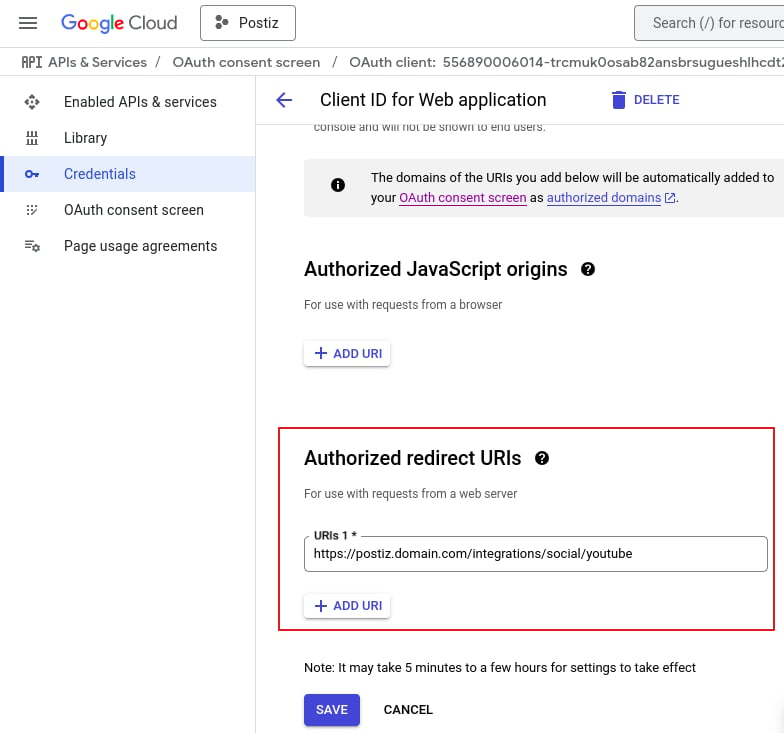 After following all of the steps above you should be met with a screen that shows your client ID and client secret. Add these to your providers configuration.
```env theme={"system"}
YOUTUBE_CLIENT_ID=""
YOUTUBE_CLIENT_SECRET=""
```
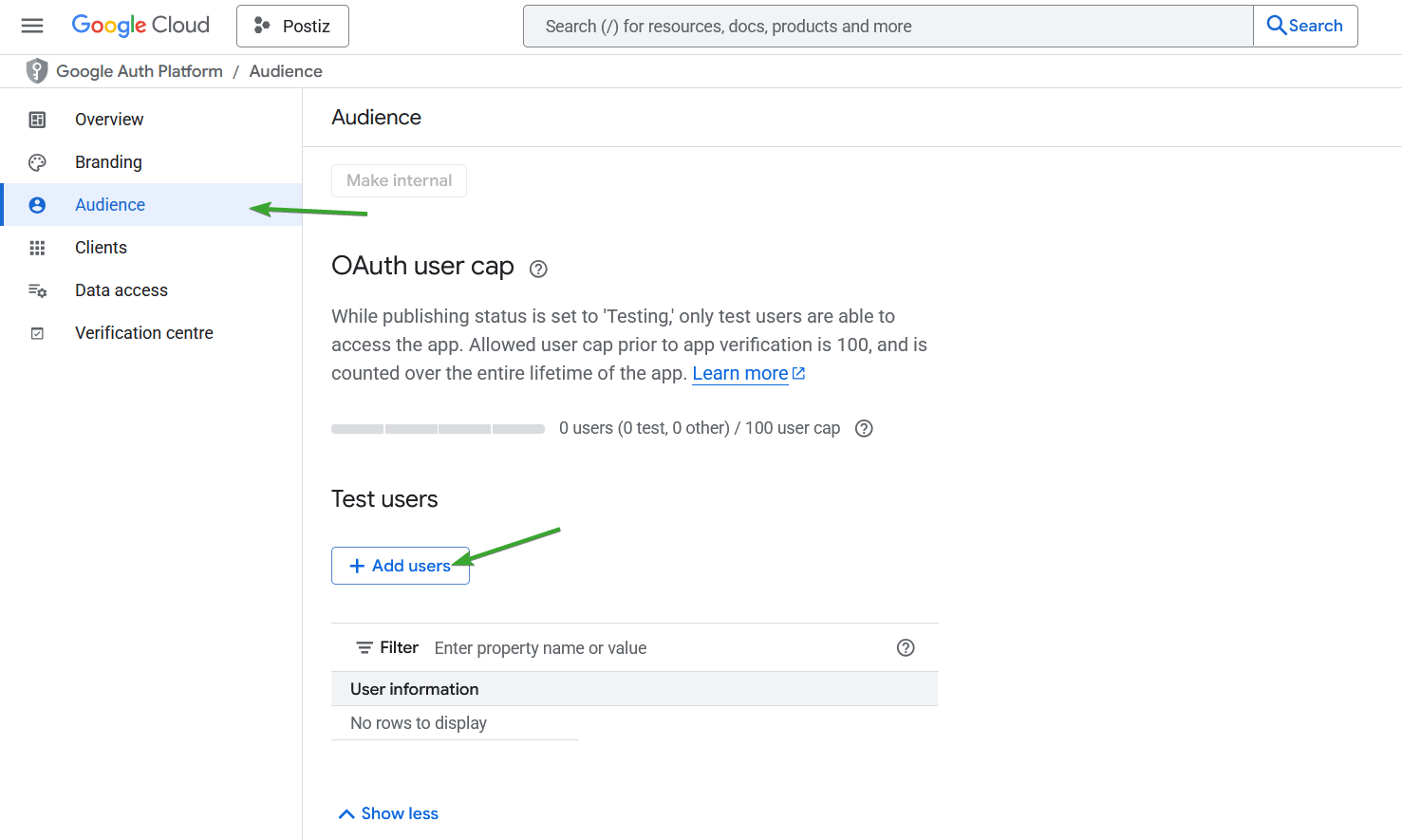
Add yourself as a test user of the application
After following all of the steps above you should be met with a screen that shows your client ID and client secret. Add these to your providers configuration.
```env theme={"system"}
YOUTUBE_CLIENT_ID=""
YOUTUBE_CLIENT_SECRET=""
```
Add yourself as a test user of the application
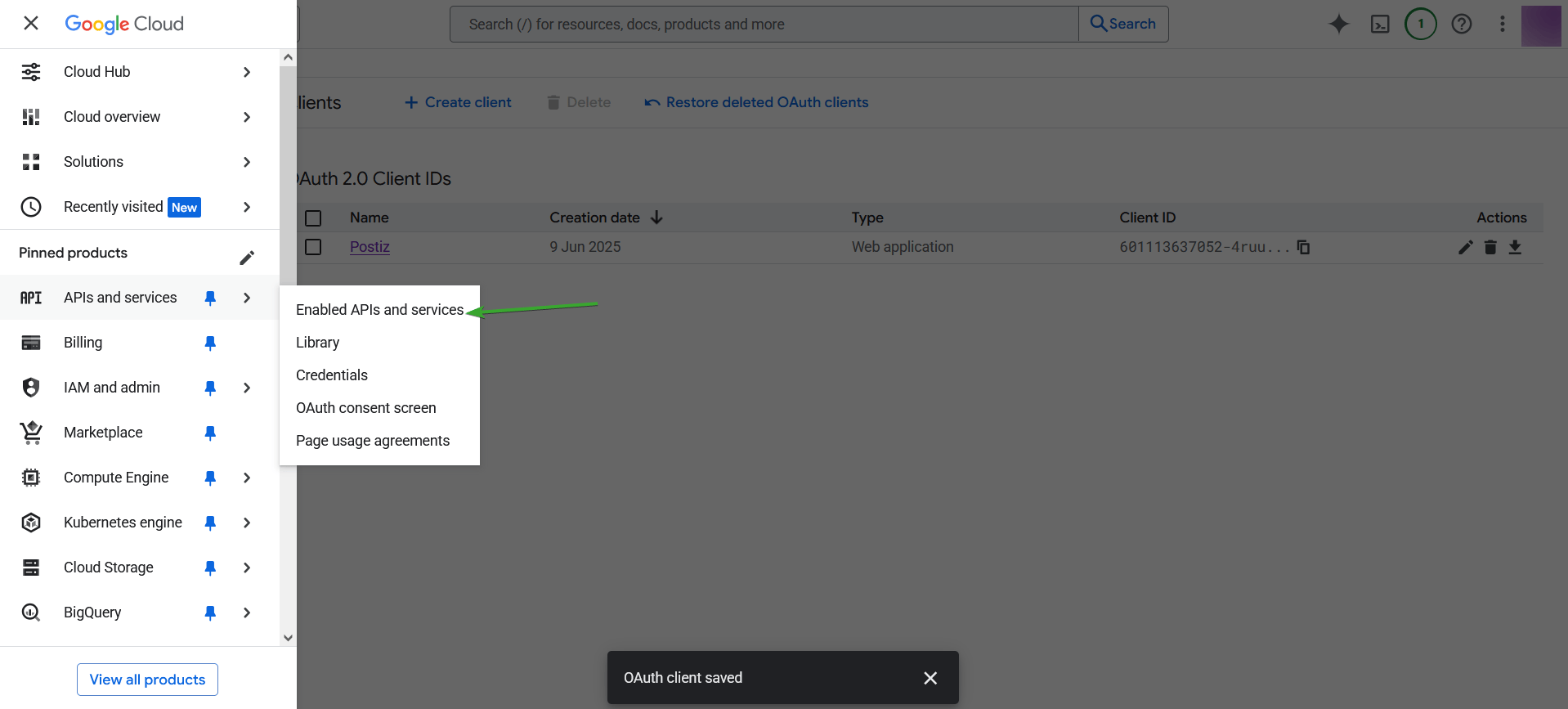
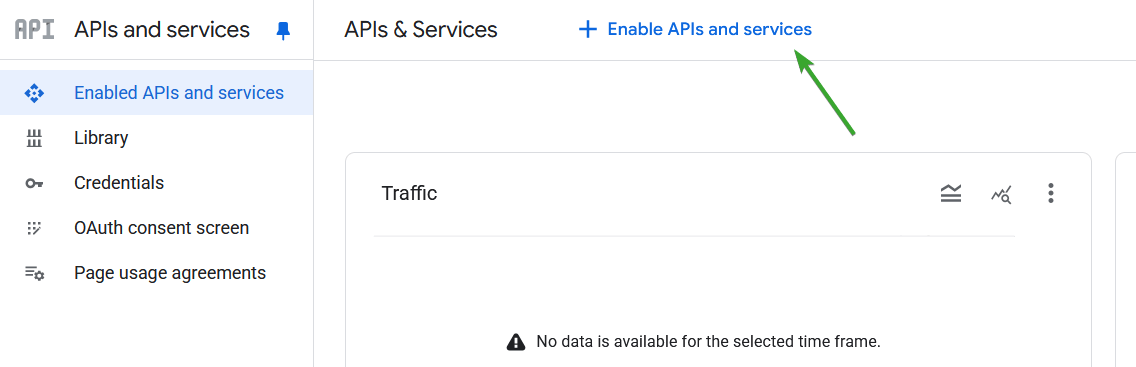
 Go to "Enabled APIs and Services". Then click on "Enable APIs and Services". Search "YouTube Data API v3" and activate the API by selecting it and clicking "Enable". Do the same Process with "YouTube Analytics API" and "YouTube Reporting API".
 ## Additional Steps for Brand Accounts
When using a Brand account you will need to set your APP to External and setup a test user. You do not need to publish the APP, but it does take time for the changes to propagate. You will also need to add the app to the trusted apps within your google workspace Admin.
Sign in
Go to Security → Access and data Controls → API Controls
Click Manage Third Party App Access
Click "Configure new App"
Put your Client ID for the app you created in previous steps into the search box and select your app
Set scopes and Google Data Access for the app to Trusted
Once set, click save
Wait at least 5 hours for the changes to propagate.
After this time you should now be able to add your YouTube channel to your PostQueen account
## Next steps
Limits, post types and settings
Every variable she reads
Invalid state, invalid\_grant and the rest
Every network, and what each one asks for
## Additional Steps for Brand Accounts
When using a Brand account you will need to set your APP to External and setup a test user. You do not need to publish the APP, but it does take time for the changes to propagate. You will also need to add the app to the trusted apps within your google workspace Admin.
Sign in
Go to Security → Access and data Controls → API Controls
Click Manage Third Party App Access
Click "Configure new App"
Put your Client ID for the app you created in previous steps into the search box and select your app
Set scopes and Google Data Access for the app to Trusted
Once set, click save
Wait at least 5 hours for the changes to propagate.
After this time you should now be able to add your YouTube channel to your PostQueen account
## Next steps
Limits, post types and settings
Every variable she reads
Invalid state, invalid\_grant and the rest
Every network, and what each one asks for