> ## Documentation Index
> Fetch the complete documentation index at: https://docs.postqueen.ai/llms.txt
> Use this file to discover all available pages before exploring further.
# LinkedIn Page setup
> Register the LinkedIn Page application and give PostQueen its keys
On your own instance the LinkedIn app is yours: create it on LinkedIn Developers, verify it, then put its client id and secret in your environment.
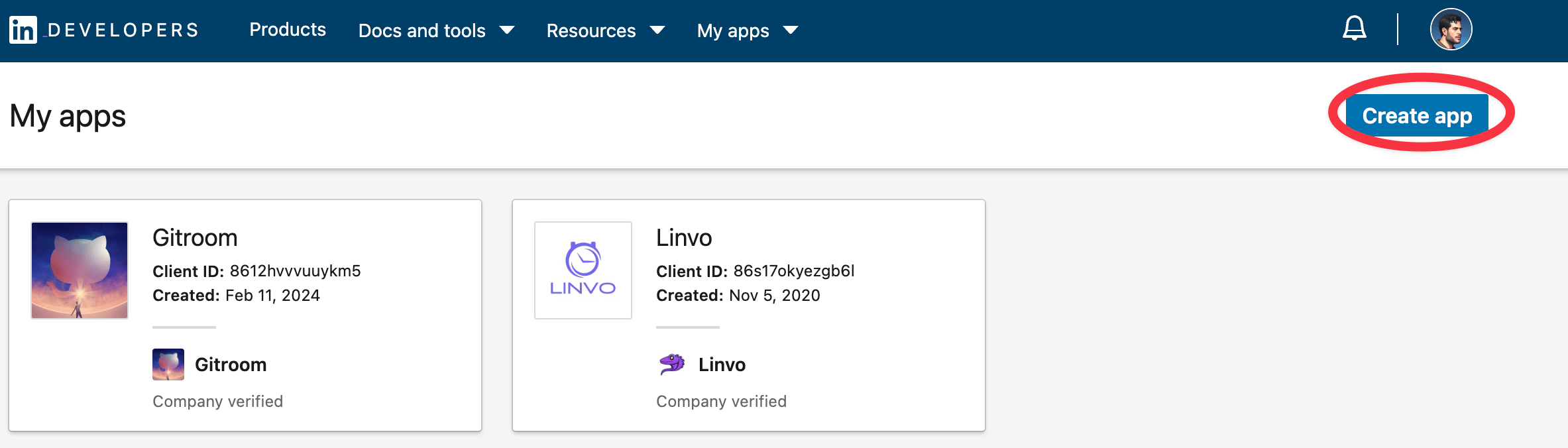
Head over to [LinkedIn developers](https://www.linkedin.com/developers/apps) and create a new app.
 Verify your app with LinkedIn
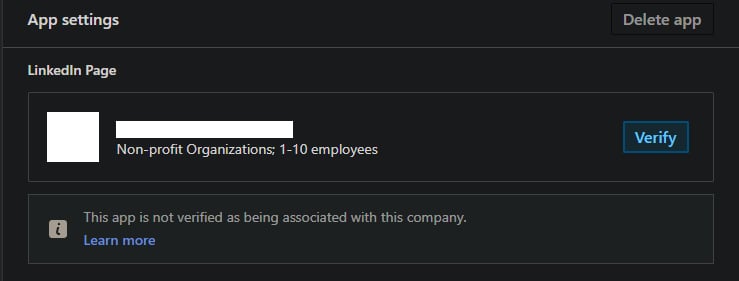 You will need to follow the verification process to request the permissions this integration needs.
Fill in all the details, once created head over to Products and make sure you add all the required products:
* Share on LinkedIn
* Advertising API
* Sign in with LinkedIn using OpenID connect
It is important to request the Advertising API permissions and fill up the request form, or you will not have the ability to refresh your tokens.
**Your LinkedIn Page OAuth2 Redirect URI:**
* Production: `https://postqueen.example.com/integrations/social/linkedin-page`
* Local development: `http://localhost:4200/integrations/social/linkedin-page`
* Docker: `http://localhost:4007/integrations/social/linkedin-page`
Copy the created `Client ID` and `Client Secret` and add them to your `.env` file.
```env theme={"system"}
LINKEDIN_CLIENT_ID=""
LINKEDIN_CLIENT_SECRET=""
```
You can find those under the Auth Tab of your LinkedIn App in the developer portal.
## Next steps
Limits, post types and settings
Every variable she reads
Invalid state, invalid\_grant and the rest
Every network, and what each one asks for
You will need to follow the verification process to request the permissions this integration needs.
Fill in all the details, once created head over to Products and make sure you add all the required products:
* Share on LinkedIn
* Advertising API
* Sign in with LinkedIn using OpenID connect
It is important to request the Advertising API permissions and fill up the request form, or you will not have the ability to refresh your tokens.
**Your LinkedIn Page OAuth2 Redirect URI:**
* Production: `https://postqueen.example.com/integrations/social/linkedin-page`
* Local development: `http://localhost:4200/integrations/social/linkedin-page`
* Docker: `http://localhost:4007/integrations/social/linkedin-page`
Copy the created `Client ID` and `Client Secret` and add them to your `.env` file.
```env theme={"system"}
LINKEDIN_CLIENT_ID=""
LINKEDIN_CLIENT_SECRET=""
```
You can find those under the Auth Tab of your LinkedIn App in the developer portal.
## Next steps
Limits, post types and settings
Every variable she reads
Invalid state, invalid\_grant and the rest
Every network, and what each one asks for